Tips for Keeping Overloading Gear Secure on Rough Terrain
Tips for Keeping Overloading Gear Secure on Rough Terrain

There’s nothing like the buzz of loading up for a long haul—packed cooler, buddy in the passenger seat, and a promising trail. Once you hit the ruts, roots, or soft sugar sand, that well-planned loadout turns into chaos.
On uneven terrain, unsecured cargo can damage your truck, wreck your equipment, and throw off your vehicle’s center of gravity. If you’ve ever cut a trip short because something came loose, or you spent your first night chasing gear that bounced off down the trail, this one’s for you. Here are some tips for keeping overlanding gear secure on rough terrain.
Balance Weight Across the Rig
Think of your rig as a moving scale—load it unevenly, and it won’t perform the way it should. It’s tempting to pile heavy items near the tailgate for quick access, but that can cause sway, rear sag, or poor traction up front. Instead, distribute weight as evenly as possible from left to right and front to back.
When you’re working with a trailer, make sure at least 60 percent of the total weight is over the axle or slightly forward of it. Keep heavy gear low and centered—fuel cans, water, and tools—so your ride remains predictable, especially on deep-sand fire roads and off-camber trails.
Install Overland Truck Bed Racks
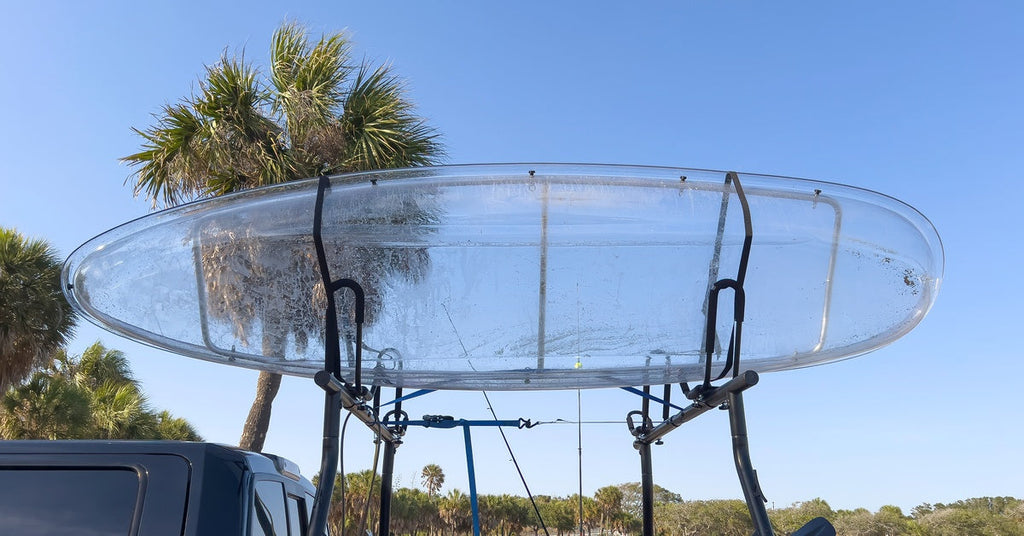
A bed rack gives you more usable space without crowding the interior or compromising your tie-down strategy. It also lets you isolate heavy gear from lighter, more fragile items. For example, jerry cans and tire carriers fit nicely low and to the sides, while lighter items like traction boards or tents can ride higher.
Plenty of truck bed racks come with modular rails or mounts that let you secure gear with multiple points of contact, which you should do when the trail gets rough and you’re hours away from pavement. Racks with powder coating or rust-resistant hardware hold up in the long run.

Rethink Rooftop Loadouts
If you’re mounting anything on the roof, it needs to be light and weatherproof. Additionally, you should lash it down securing. Sleeping platforms and rooftop tents are generally all right, but strap down lightweight bins and bags with two points of attachment minimum. Use ratchet straps for bulk, and try cam buckles for gear that shifts with trail movement.
Check every strap or rooftop attachment before and after any high-speed sand driving. Gear shifts differently depending on terrain, and fasteners can degrade faster than you expect.
Use Lockable Storage Boxes
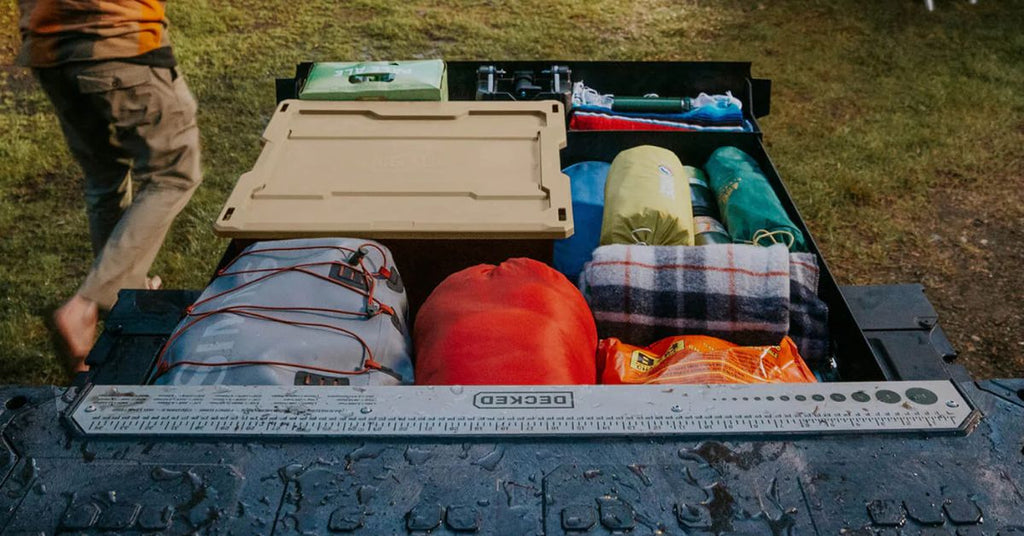
Soft duffels slide, buckle, and shift with every bump. That might be fine on pavement, but it can quickly turn chaotic when you go off-road. Lockable storage boxes—preferably ones that mount directly to the rack or bed—secure your gear. They also save you time since you won’t have to dig through loose bags for your tire deflator or flashlight.
Choose boxes with latching lids and built-in tie-down points. Plastic may be lighter, but aluminum or steel can take more hits if you’re hauling recovery gear or tools. Just be mindful of humidity: if the box isn’t waterproof and vented, your stuff might come out soggy and musty after just one storm.
Secure Spare Tires
A full-size spare isn’t something you want shifting around. Whether it’s mounted to your bumper, rack, or interior cargo space, it’s more cargo. A loosely secured spare can become dangerous in the event of a sudden jolt or brake.
Use a bracket or cradle built for your tire’s size and weight, not just a bungee cord or ratchet strap. If the mount allows for a padlock or safety latch, take advantage. Double-check lug tightness before every trip and again after driving 100 miles, especially if the tire is exposed to heat and vibration.
Use Traction Board Mounts
Traction boards are a staple for sandy trails and loose soil, but they’re also a pain to secure. When they’re wedged loosely on the roof or hanging from the side of your rack, you’ll hear them rattle long before they help you out of a jam.
Dedicated traction board mounts are worth the upgrade. Some clamp to truck bed racks or roof racks and include locking pins or bungee channels for extra security. Mount them vertically if possible, as it reduces flex and gives you easier access when the trail turns soft.

Fasten Recovery Gear
D-rings, shackles, tree savers, and soft ropes can bounce, rattle, or vanish if unsecured. The last thing you want is to realize your snatch block has worked its way loose.
Store recovery gear in a zippered roll or a lockable case. If it lives inside the cab, anchor the bag with carabiners or interior tie-down points. If you’re storing it on the rack or bumper shelf, run a steel cable or lashing strap through the handles to keep things together.
Add Interior Tie Points
Once the truck bed is dialed in, don’t overlook the cab! Loose tools, fuel additives, and emergency gear inside your vehicle can fly during a hard brake or roll.
Install a set of interior tie points or use a rear seat cargo net to keep small items in place. Even a fire extinguisher should be mounted. Velcro straps and quick-release brackets are a safe bet here. For any rigs that don’t come with mounting options, look for universal kits that attach to seat rails or back panels.
Don’t Let Loose Gear Cost You
No matter how solid your setup is, one loose cooler lid or spare can turn into a troublemaker. Debris that falls into the road can lead to serious fines or cause a wreck with another driver. The goal is protecting your gear and keeping the whole trail community safe.
If you’re not sure your current rig is up to the challenge or you’d like more tips for keeping overlanding gear secure on rough terrain, our team at Twisted Pro All-Terrain is happy to help. Whether you’re local to the St. Augustine, FL area or visiting nearby trails, we can walk you through product fitment, install tie-downs and mounts, or talk shop about the terrain you’re heading into.